

The mozzarella cheese slides across the marinara sauce, spills off the side of the pizza slice onto the red-hot electric element. Smoke spews from the toaster oven and the odor of burnt cheese spreads through the kitchen. The black dog is anxious, if the smoke alarm activates, she will go bat-shit crazy. I open the window above the sink, the smoke dissipates, and drama is averted. Two crows swoop from the maple tree and land on the beach. They swivel-strut across the sandy shore, disturbing the sojourning ducks and seagulls; they are like two businessmen in dark suits ruining the vacation vibe at a spa. They seem out of place, like me.
The acrid smell of scorched cheese lingers.
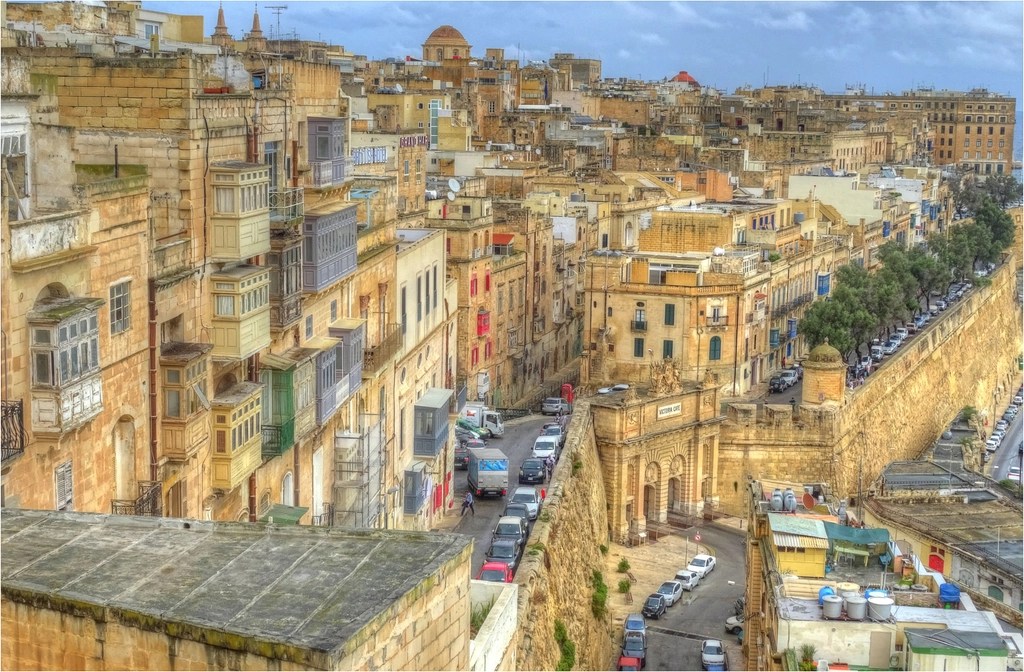
The Friggieri house, located near the twin towers of St Publis Church, was built of blocks of ocher limestone quarried directly from their land. The front of the house was adorned with purple bougainvillea, the doors and windows were painted lemon green. The house was arranged around a hidden courtyard, where h exotic flowers and shrubs flourished owing to a constant flow of mineral-rich water from the family well.
Mr. Friggieri’s son, Edward, was dressed in a white flannel shirt, black slacks cinched at the waist; he possessed the severe manner of a Jesuit. He stooped over the stove, tossed the pasta and ragu sauce in the blackened pan, then threw in a handful of cheese. Steaming hot, he divided the dish evenly, and we sat at the wooden table in the tiled parlor, washing down the spaghetti bolognese with sweet water direct from the ancient cistern. Mum arrived, she and Edward dallied under the stars.
“I think this place might be heaven on earth”, she gushed, as we rushed down the narrow street into the walled city of Valletta, late for choir practice at the Cathedral, not far from Dad’s office in the dockyards.
Mum and I visited the Friggieri’s often. Mr. Friggieri at the piano, she standing at his side with her small hand on his angular shoulder as she sang. They would rush through sheets of music, opera and show tunes. The raw power of her voice, the intimacy of their duet overwhelmed me, so I would sneak out of the house and wander down the quiet little road in Floriana, dawdling beneath the gnarled Mediterranean pines until the singing stopped and the drama ended. Mr. Friggieri would retire to his study, and my mother bustled around helping the siblings – Edward and Lucia – the nieces, and cousins, tidy up the parlor; they would bump into each other, laughing.
Lucia was my favorite. She looked like Sophia Loren, especially when she bouffed up her hair. Mum and I once spied her sashaying along a narrow alley, arm-in-arm with a girlfriend, near the Basilica, pursued by a pack of boys practicing their catcalling, blowing on their fingers – too hot to touch. When she looked at me, I melted.
It was the Feast of Santa Marija. I was corralled into the parlor, where I joined a party of Floriana girls dressed in white lacy party dresses, white socks, sensible black shoes, all with wavy brown or black hair, tamed with red and yellow ribbons and bows and sparkly crowns: Friggieri nieces and cousins, descendants in a family tree spread wide by maternal branches. We perched on the wooden bench that lined the walls, an arrangement of knobby and scarred knees, our brown legs swinging back and forth loosely.
The giant wedge of Timpani was presented on a plate. Cannelloni stuffed with pork and liver ragu, parmesan, provolone and ricotta cheese, onions, parsley, basil, boiled eggs, stuffed into a thick wheat drum pie. The marinara sauce dripped on their dresses, smeared the cheeks of the girls, and stained the khaki shorts of my school uniform.
The Maltese girls got the silly English boy to dance and jig – to The Beatles, to Ziggy Stardust. We spilled into the kitchen and into the dark courtyard. Mr. Friggieri, joined us at one point, waltzed to a Tom Jones song with my Mum, while Lucia and Edward watched from the doorway. Lucia was clapping and laughing, Edward was moving his hand in time to the music, open-palmed, as if he was rehearsing the dance, as if his hand, not his father’s, was resting on the small of my mother’s back, guiding her around the room. I hoped the evening would never end.
There was loud bang, then another, greeted with cheers. We left the house and marched gaily to the Basilica, where the heavens were on fire. Massive fireworks exploded above the tenements and baroque palaces, above the alleys and piazzas. Smoke filled the air, bits of black flaming paper fell from the sky, charred remnants of cakes and rockets drifted across the flagstones. A phalanx of young men roared, they bore aloft a statue of St Marija, a silver tiara-burst atop her blue-and-gold bonnet. Lucia held my hand. I was six feet tall and felt like James Bond.
My ears were ringing as I fell asleep that night, Mum singing “There’s a star man waiting in the sky”. My ears were still buzzing the next morning when I woke up in our disappointing little flat in Sliema.
I was truant from school. We drove out to Dingli Cliffs, a desolate peninsular, on a day that started out rainy but turned hot and sunny. Mum bought me roasted chickpeas, tucked in a paper cone, and an iced bottle of orange Fanta. She didn’t eat. She looked pale and sickly, and seemed preoccupied, as if killing time. We drove to the Friggieris late in the afternoon.
Mum and Mr. Friggieri withdrew, some kind of musical tryst I supposed. Alone, bored, I went into the courtyard, where I was examining the roses when suddenly there was a commotion in the upper story of the house; two men were arguing, fighting. A woman moaned incoherently, then silence. Moments later my Mum came out of the backdoor into the courtyard, buttoning her blouse.r. She was crying, Edward was shouting at her in Maltese from an upstairs window. She dragged me through the house, Mr. Friggieri intercepted us in the hallway, his shirt loose, his suspenders hanging at his side, graying hair tousled. He reached for mum’s arm, “Rosie!”, he said, but she brushed him off.
Mum told me that she and Dad were getting a divorce, that she and I would leave Malta, this sunny island in a turquoise sea, and return to England. It would be cold, I would need a sweater, it would be wet, I would need a coat, it would be dark in winter, the flowers would die for half the year. I wiped a tear from my mother’s face, and she smiled sadly, told me that I shouldn’t worry. When she wasn’t looking, I licked her salty tear from my fingertip, and it tasted like the Sea.
They say we are mostly water, that we came from the sea, but that day I cried tears that ran into the ocean, and I knew that they were wrong: the sea flows from us. The ocean is a vast expanse of sorrow, where dreams die, where love is lost, where hope goes when it is abandoned.
Dad moved out; our departure date was set. Mum and I drove one last time to Floriana. She knocked at the door, no answer; she pushed against it, but it would not yield. There was something un-English, something desperate and honest that scared me. She would not leave. Facing the Friggieri home, softly at first, then louder she sang, a lament. Her voice filled the street, the neighborhood, the entire island of Malta. Two jackdaws, startled, flew off as her voice crested and broke, and I wanted to follow them, to hide somewhere.
The door opened, Lucia appeared, and shushed at mum, waving as if trying to put out a fire, “You cannot do this Mrs. Davenport, you cannot sing like this in the street. You will cause a problem for all of us,” she said.
Behind her, in the shadowy hallway, Edward was expressionless, as if biting the insides of his cheeks, smoking a cigarette. My mother’s distress was boundless, her blonde hair was a rat’s nest, mascara ran down her face, and mucus bubbled from her nose. This was not my mother; this was not the fixed and certain center of my universe. I started to cry, tugging at her sleeve, looking for comfort, but she had none to give.
“You must go now,” said Edward looking directly at me, “you must be a man. Take your mother back to the car, and go home.” The instruction was not unkind, “there is no place for you, or your mother here” he said.
We left Malta aboard a VC10, a BOAC flight from Luqa to Stanstead. It was 5.00 o’clock in the afternoon when we touched down in England, but it was already dark, and it was cold, wet and dreary. We had carry-on bags and two old trunks full of clothing, some photos, some sheet music and not much else. Just memories. Standing outside the terminal, waiting for a taxi, under the sodium light, in light rain, mum seemed old, lost and out of place, song torn from her.
An osprey is circling above the bay, the gulls and ducks are agitated, the two crows take flight, back into the branches of the maple tree. Two crows, two jackdaws. The Osprey floats off out to sea, out to where a white boat is throttling back to the harbor. Here, the sea is gray and opaque, a different shade of sorrow, the people are gritty, their homes utilitarian and their stories are written in prose. I am still out of place.
I take a bite of hot pizza, the molten cheese cools and congeals in my mouth, and I remember the one place where I thought I might have belonged.
This story was originally published on Reedsy.com in response to the prompt: ‘Hit a tripwire of smell and memories explode all at once.’ Use the senses to transport a character back to the past….
Https”//blog.reedsy.com/creative-writing-prompts

 Luca King Greek
Leave a comment